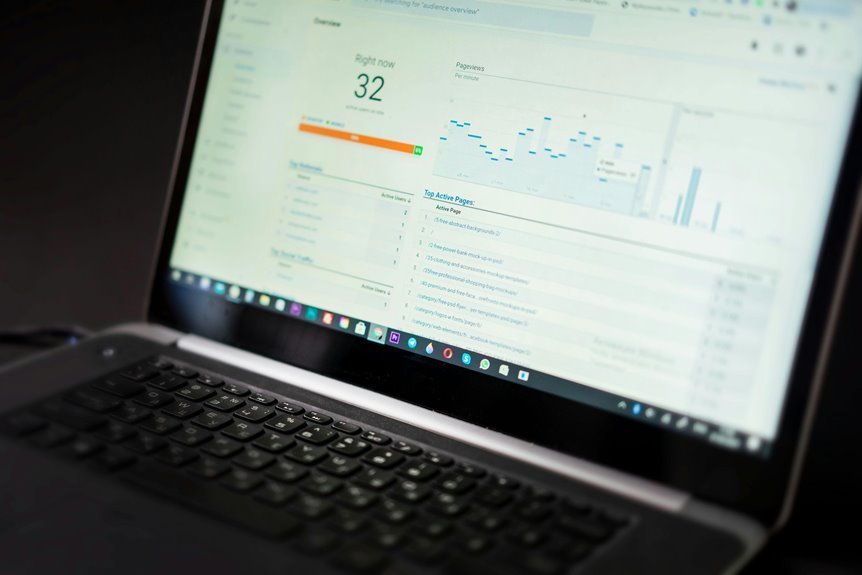
The Executive Market Metrics Dashboard presents critical performance indicators essential for strategic decision-making. With a focus on real-time data, this dashboard enhances data visualization, allowing organizations to interpret complex information effectively. Key metrics provide insights into market trends and user engagement. However, understanding how to implement such a tool effectively can significantly impact organizational success. What considerations must leaders take into account to maximize its potential?
Understanding the Executive Market Metrics Dashboard
The Executive Market Metrics Dashboard serves as a pivotal tool for decision-makers, encapsulating essential data points that drive strategic insights.
Its effective dashboard design enhances data visualization, allowing users to interpret complex information intuitively.
Key Metrics to Monitor for Strategic Insights
While various metrics can provide insights into market performance, certain key indicators stand out as critical for strategic decision-making.
Key performance metrics, such as customer acquisition cost and lifetime value, directly influence resource allocation.
Additionally, tracking market trends allows organizations to adapt swiftly to changes.
Collectively, these metrics empower executives to make informed choices that foster agility and competitiveness in the marketplace.
Benefits of Real-Time Data in Decision-Making
Harnessing real-time data can significantly enhance decision-making processes within organizations.
By ensuring data accuracy, leaders can rely on up-to-date information, which minimizes risks associated with outdated insights.
Furthermore, the acceleration of decision speed allows organizations to respond swiftly to market changes, fostering agility.
This dynamic approach not only improves operational efficiency but also empowers teams to make informed decisions confidently.
Implementing an Effective Dashboard for Your Organization
Implementing an effective dashboard requires a strategic approach that aligns with organizational goals and user needs.
A well-executed dashboard design enhances user engagement by presenting relevant metrics clearly and intuitively. By prioritizing data visualization and interactivity, organizations can empower users to derive insights efficiently.
Ultimately, a tailored dashboard promotes informed decision-making, fostering a culture of transparency and responsiveness within the organization.
Conclusion
In conclusion, the Executive Market Metrics Dashboard serves as an indispensable tool for organizations seeking to navigate the complexities of today’s business landscape. While some may argue that implementing such a dashboard requires significant investment and resources, the immediate access to real-time data and actionable insights justifies the initial costs. By fostering informed decision-making and enhancing adaptability to market fluctuations, this dashboard ultimately positions organizations to thrive and maintain a competitive advantage.